









November in North Texas brings sharp winds, cold snaps, and dry air, all of which put your home’s siding to the test. When panels loosen, warp, or crack, they expose your home to heat loss, water intrusion, and long-term structural damage. For homeowners preparing for winter, timely Johnson County siding repair can make all the difference.
This educational guide combines the insights of licensed Texas contractors, NOAA weather data, and real Johnson County homeowner stories to help you protect your property before temperatures drop. Whether you live near Burleson, Cleburne, or Joshua, understanding how to identify, fix, and prevent siding issues will save you time, money, and stress this season.
Why Siding Maintenance Matters in Johnson County
Siding does more than just make your home look good, it acts as a shield against wind, rain, and temperature swings. In Johnson County, these fluctuations can be extreme. According to NOAA, average November winds exceed 12 mph, and cold fronts can drive temperatures below freezing.
If your siding is loose, cracked, or improperly sealed, that wind can push cold air directly into your home’s insulation cavity. Over time, moisture intrusion leads to warped wood, peeling paint, and even mold growth. Regular Johnson County siding repair keeps your home sealed, energy-efficient, and ready for winter.
The November Wind and Cold Expose Weak Siding
By late November, cold fronts sweep through North Texas, often following weeks of dry heat. This rapid temperature shift causes siding materials, especially vinyl and wood, to contract. The result? Gaps at joints and panels that pull away from their anchors.
That’s why contractors recommend Johnson County siding repair before the first major cold snap. Addressing these issues early prevents wind-driven rain and freezing temperatures from causing deeper damage.
Common Signs You Need Siding Repair
Licensed contractors in Johnson County often see the same warning signs when inspecting homes this time of year. You may need Johnson County siding repair if you notice:
- Warped or bulging panels
- Peeling paint or bubbling under the surface
- Cracks around corners or window frames
- Drafts or noticeable temperature changes indoors
- Increased energy bills without explanation
One homeowner in Burleson recently noticed that their heating system was running nonstop. After an inspection, we discovered multiple siding gaps near the attic line where wind was seeping through. After completing a targeted Johnson County siding repair, their energy efficiency improved dramatically.
Step 1: Inspect for Gaps and Warping
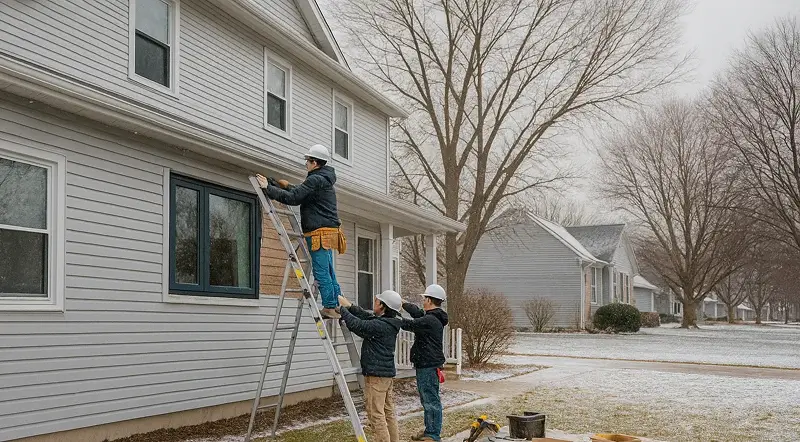
Start by visually inspecting your siding on a sunny day. Walk around your home and look for panels that don’t sit flush or show discoloration. During Johnson County siding repair, professionals also check for:
- Nail pops from wind pressure
- Small cracks at joints
- Gaps between trim and siding
These subtle flaws may seem minor now, but once cold air and moisture enter, they can lead to rotting sheathing or insulation deterioration.
Step 2: Repair or Replace Damaged Panels
Not all damage requires full replacement. Skilled contractors performing Johnson County siding repair can often patch isolated sections, reseal joints, or re-anchor panels that have loosened from wind exposure.
Vinyl siding, for example, can be “unzipped” to access the damaged portion without removing large sections. Fiber cement and wood siding may require more detailed work, but the result is a seamless appearance that restores integrity.
In one project south of Cleburne, our crew replaced only 15% of a home’s siding but completely eliminated drafts along the north-facing wall.
Step 3: Seal and Caulk Around Openings
Windows, doors, and trim are the most common entry points for moisture. During Johnson County siding repair, contractors reseal these areas using high-grade, weather-resistant caulk. This step is critical in preparation for winter, as it prevents water intrusion during wind-driven rain.
For older homes, upgrading to modern caulking materials can make a dramatic difference in both insulation and long-term siding durability.
Step 4: Clean and Treat Siding Surfaces
Even if your siding isn’t visibly damaged, surface maintenance matters. Dust, mildew, and pollen buildup weaken paint coatings and trap moisture. Before winter, homeowners should wash siding using mild soap and water or a low-pressure power washer.
Our team includes this step in every Johnson County siding repair project to ensure that surfaces are free of contaminants before resealing or painting. This not only boosts curb appeal but also adds years to your siding’s lifespan.
Step 5: Add Insulation and Vapor Barriers
For homes with older siding systems, adding an extra layer of insulation can significantly improve energy performance. When performing Johnson County siding repair, we often install house wraps or foam boards behind the siding to enhance thermal efficiency and moisture resistance.
This added protection helps stabilize indoor temperatures, keeping your home warmer during cold spells and cooler during spring’s unpredictable weather.
Step 6: Repaint or Refinish as Needed
After completing structural and sealing repairs, repainting provides the finishing touch. High-quality exterior paint acts as a secondary weather barrier, blocking UV damage and water penetration.
Contractors trained in Johnson County siding repair always recommend using paint formulated for Texas conditions, durable enough to withstand intense sunlight, wind, and moisture swings.
Local Weather Insight: How Texas Conditions Affect Siding
Johnson County homeowners face unique weather challenges compared to other regions. While Highlands Ranch in Colorado deals with hail, and Littleton contends with monsoon bursts, North Texas battles fierce winds and thermal stress.
According to NOAA, wind gusts above 40 mph are not uncommon during late fall cold fronts. These gusts pull at siding seams, especially on the western and northern exposures of homes. That’s why proactive Johnson County siding repair is key to maintaining long-term performance.
Real Customer Scenario: Beating the Wind Before Winter
A homeowner near Keene contacted us last November after hearing rattling noises along their exterior wall during a cold front. Upon inspection, our team discovered that several vinyl siding panels had loosened due to summer expansion and autumn contraction.
We completed a comprehensive Johnson County siding repair, securing loose panels and resealing corners. The following week, another front rolled through, but this time, their home was silent and warm. Their experience underscores how early action prevents major problems once the winter wind arrives.
Professional vs. DIY Siding Repair
While some homeowners attempt minor repairs themselves, most Johnson County siding repair jobs benefit from professional expertise. Contractors bring specialized tools, safety equipment, and knowledge of how different materials respond to temperature changes.
Improper nailing patterns or uneven spacing can lead to future cracking or warping. Licensed professionals ensure that each repair meets manufacturer and regional building code standards.
For full peace of mind, homeowners often hire Siding Repair Contractors with proven local experience, like the team at Ripcord Roofing.
Local Expertise You Can Trust
At Ripcord Roofing, we’ve helped hundreds of homeowners across Johnson County strengthen their siding and roofing systems before winter. Our licensed team uses only proven techniques, durable materials, and region-specific installation practices tailored for Texas weather.
When you Visit us in our office in Wylie, TX, you’ll meet professionals who understand your neighborhood, your weather, and your home’s construction.
We don’t just repair siding, we restore comfort, efficiency, and protection.
Conclusion
Johnson County’s cold winds and sudden weather changes make siding maintenance more than just cosmetic, it’s essential home protection. By scheduling timely Johnson County siding repair, you keep your home warm, energy-efficient, and secure throughout the winter months.
Don’t wait for damage to get worse once cold fronts hit.
Schedule an Inspection with Ripcord Roofing today and make sure your siding is ready for whatever November brings.
Frequently Asked Questions
How often should I inspect my siding?
At least twice a year, before summer and before winter. Fall is ideal for Johnson County siding repair to prepare for wind and cold.
Can wind really loosen siding?
Yes. Strong November gusts can pull nails or clips free, especially if the siding is older or poorly installed.
Is replacement better than repair?
Not always. Skilled contractors can often perform localized Johnson County siding repair that extends your siding’s life without full replacement.
Which siding type performs best in Texas?
Fiber cement and insulated vinyl are both excellent choices due to their resistance to heat, wind, and moisture.
What’s the average cost of siding repair?
It varies based on material and damage extent. An inspection provides an accurate estimate tailored to your home.